
Pageant Dresses for Toddlers vs. Juniors: What's the Difference
Posted by Prom Headquarters on Jun 18th 2026
The Prom Points: Our blog breaks down exactly what separates pageant dresses toddler styles from junior styles, so you buy for your daughter's age division, competition category, and performance needs with full confidence.
- Toddler pageant divisions prioritize natural personality, comfort, and mobility over structure or embellishment
- Junior divisions score on poise, presentation, and category compliance, requiring more structured construction and formal hemlines
- Fabric weight, closure type, silhouette, and embellishment level each serve a specific function depending on the age group
- Competition category (glitz, natural, formal wear) determines dress requirements as much as age does
- Adjustable closures like corset or lace-up backs are critical for junior competitors due to rapid growth between fittings
There it is—the perfect dress online. It’s a gorgeous shade, sparkly, and exactly what you pictured her in. Then you realize a split second before adding to cart, it’s sized for a junior, not your three-year-old, and your hard work and research slide back to square one.
If you’re brand new to pageants, the difference between pageant dresses for toddler styles and junior styles isn’t as easy to tell. But getting it wrong means a child is uncomfortable in her own dress, poor stage presentation, or wears a dress that doesn’t meet competition guidelines.
We cover exactly what separates toddler and junior dresses before committing to spending a cent.
How Do Pageant Age Divisions Affect Dress Requirements?
A six-year-old and a twelve-year-old perform completely difference on stage, so pageant divisions separate competitors by age. Judges score them on different criteria. Their bodies move differently, and their routines demand different things from their clothes.
Most competitions use these age brackets:
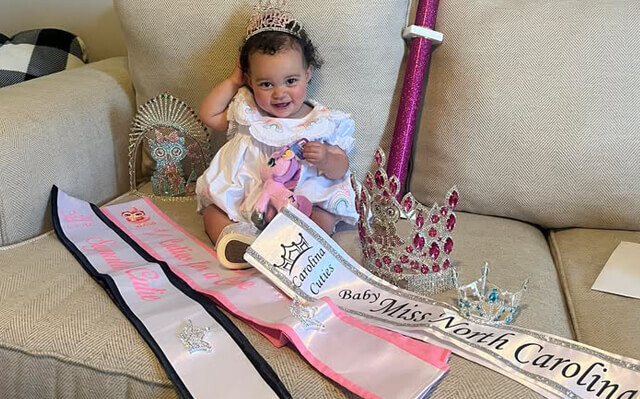
- Toddler: Ages 0 to 3
- Tiny Miss / Mini Miss: Ages 4 to 6
- Junior: Ages 7 to 12 (sometimes up to 13)
A toddler division rewards natural personality and comfort on stage. A junior division rewards poise, stage presence, and polished presentation. That gap changes how each dress is constructed, what it's made of, and how it should fit.
Why Are Toddler Beauty Pageant Dresses in Their Own Category?
Judges in toddler competitions consider personality, natural beauty, and stage comfort. A dress that feels itchy, restricts any movement, or irritates sensitive skin is a dress that will distract and show on her face before she can even take center stage.
1. Toddler Girl Pageant Dresses: Built for Little Bodies (and Short Attention Spans)
An exceptionally designed toddler pageant dress prioritizes two things: comfort and movement.
Here’s what sets pageant dresses for toddlers apart:
- Shorter hemlines. Knee-length or tea-length styles keep little legs free to walk, turn, and wave without tripping.
- Soft, lightweight fabrics. Tulle, chiffon, and stretch velvet work well. Stiff boning or heavy beading? Leave that for older competitors.
- Simple closures. Hook-and-eye backs, or wide zipper plackets, make backstage changes faster and less stressful.
- Minimal embellishments. Subtle glitter, small bows, and soft appliqués add sparkle without adding weight or scratchy textures.
Toddler pageants are more focused on natural beauty and personality: judges want to see a happy, confident child.
2. Color and Silhouettes for Toddlers
Bold, saturated colors are dominating 2026 fashion across the board, and that carries straight onto the pageant stage. Jewel tones, coral, royal blue, and red all read clearly under stage lighting. For silhouette, match what your pageant category requires: glitz divisions typically call for dramatic volume, while natural divisions reward freedom of movement over structure.
What Changes with Pageant Dresses for Juniors?
Poise, presentation, and category compliance: that’s what junior divisions are scored on. A dress built for a toddler’s comfort and mobility won’t meet any of these junior standards.
1. More Structure, More Stage Presence
Competitors in their junior years carry themselves differently. They’re a bit more experienced, as they’ve usually done pageants before. They hold their posture, hit their marks, and understand the concept of stage presence. Beauty pageant dresses for juniors often reflect that growth.
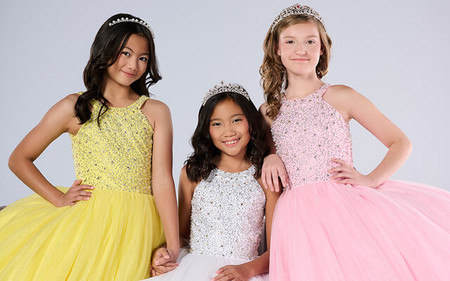
- Floor-length or formal hemlines. Longer silhouettes project maturity and work within most formal competition categories.
- More structured construction. Light boning, built-in bustiers, and layered skirts create shape and hold the dress in place during choreographed routines.
- Elevated embellishments. Rhinestone bodices, beaded straps, and layered tulle skirts add visual impact without overwhelming a pre-teen's frame.
- Modest but fashion-forward necklines. Square necks, sweetheart shapes, and illusion necklines are all age-appropriate choices for junior competitors.
2. Junior Pageant Dresses Need Adjustable Closures
Junior competitors are in a constant stage of growth. A dress that fits perfectly in January generally won’t work by April. When possible, choose styles with lace-up backs or corset closures. These will allow small adjustments without full alterations.
How to Choose a Pageant Dress? Your Key Questions
Answers to these four simple questions can cut out bad options before buying:
- What category is your child competing in? Natural, glitz, and formal wear categories all have different dress expectations.
- What is the venue's stage lighting? Darker stages benefit from lighter, more reflective fabrics. Bright stages let deeper colors shine.
- How active is the routine? A high-energy dance routine needs a very different dress than a simple walk-and-wave format.
- What's the alteration budget? Even the best-fitting off-the-rack dress will likely need minor hemming or bustle work.
For toddlers, prioritize how it fits and how it feels (comfort). For juniors, prioritize style, coverage, and category appropriateness.
Quick Comparison: Toddler vs. Junior Pageant Dresses
|
Feature: |
Toddler (0-6): |
Junior (7-12): |
|
Hemline: |
Knee to tea length |
Floor length or formal |
|
Fabric weight: |
Light, soft, flexible |
Structured, layered |
|
Embellishments: |
Subtle, minimal |
Rhinestones, beading |
|
Silhouette: |
Cupcake, A-line |
Ball Gown, A-Line, Mermaid |
|
Closure type: |
Wide zippers, hooks |
Corset or lace-up preferred |
|
Key Priority: |
Comfortable, range of movement |
Stage presence and fit |
Toddler Dresses Won’t Win Junior Division. Junior Dresses Will Swallow up a Toddler.
Buying outside your child’s age and division wastes your time, hard-earned money, and costs them precious points. The construction, silhouette, and embellishment level exists for specific reasons tied to how each age group performs.
Nail the category, nail the fit, and her score will reflect both.
Prom Headquarters carries little girl’s pageant dresses made for divisions and your little girl’s comfort. Find her size, category, and stage look all in one place.